

Eleven of the Country's Most Experienced High-Rise and Large-Structure Firefighters Are Headed to Colorado Springs

Fire in the Sky Instructors 2026
More Air. More Time.
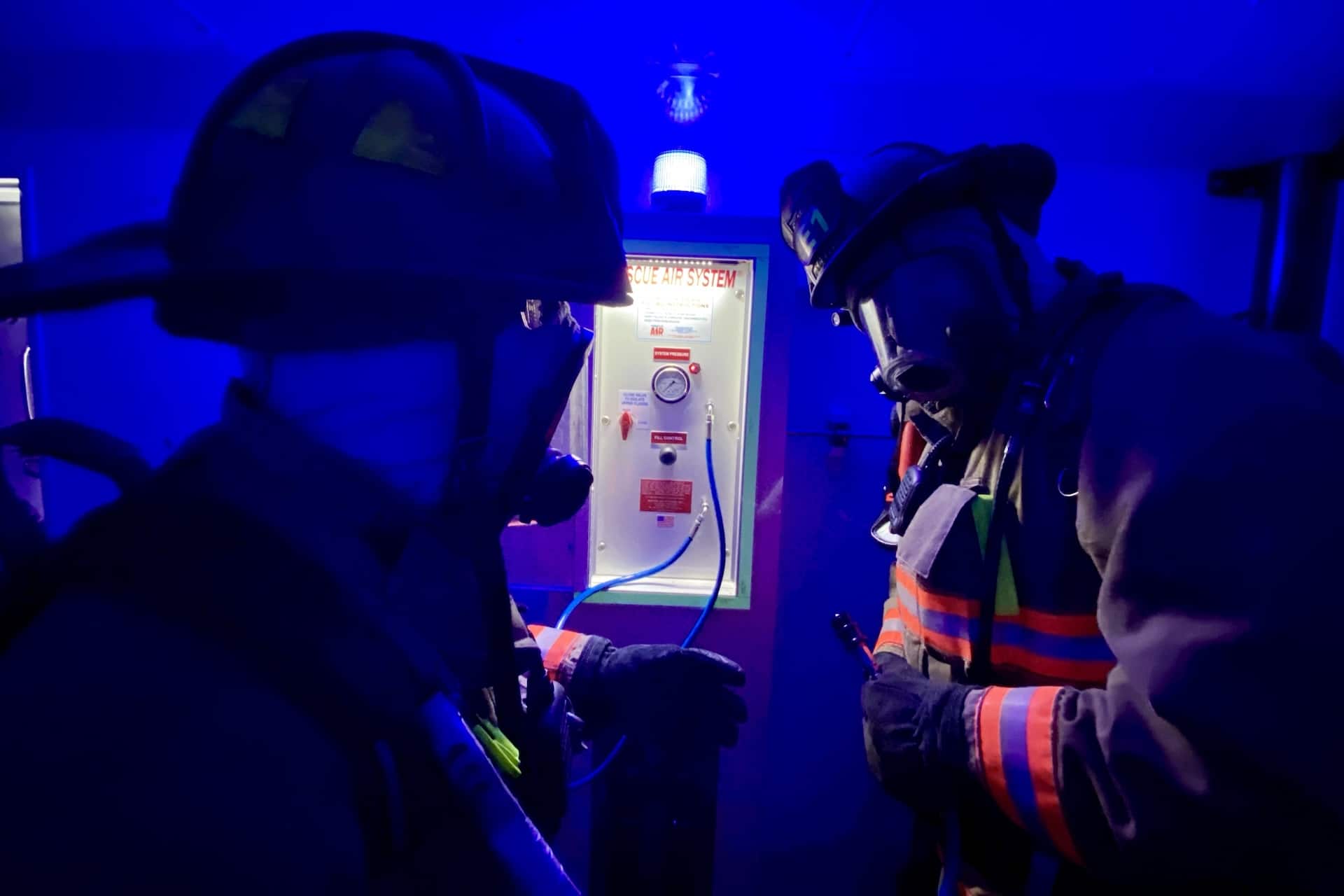
Firefighters connecting for air resupply
Three-Day Fre in the Sky 2026 Runs March 17–19 at Hotel Polaris — the First Hotel in Colorado with an Installed Air Standpipe Specifically for Firefighting
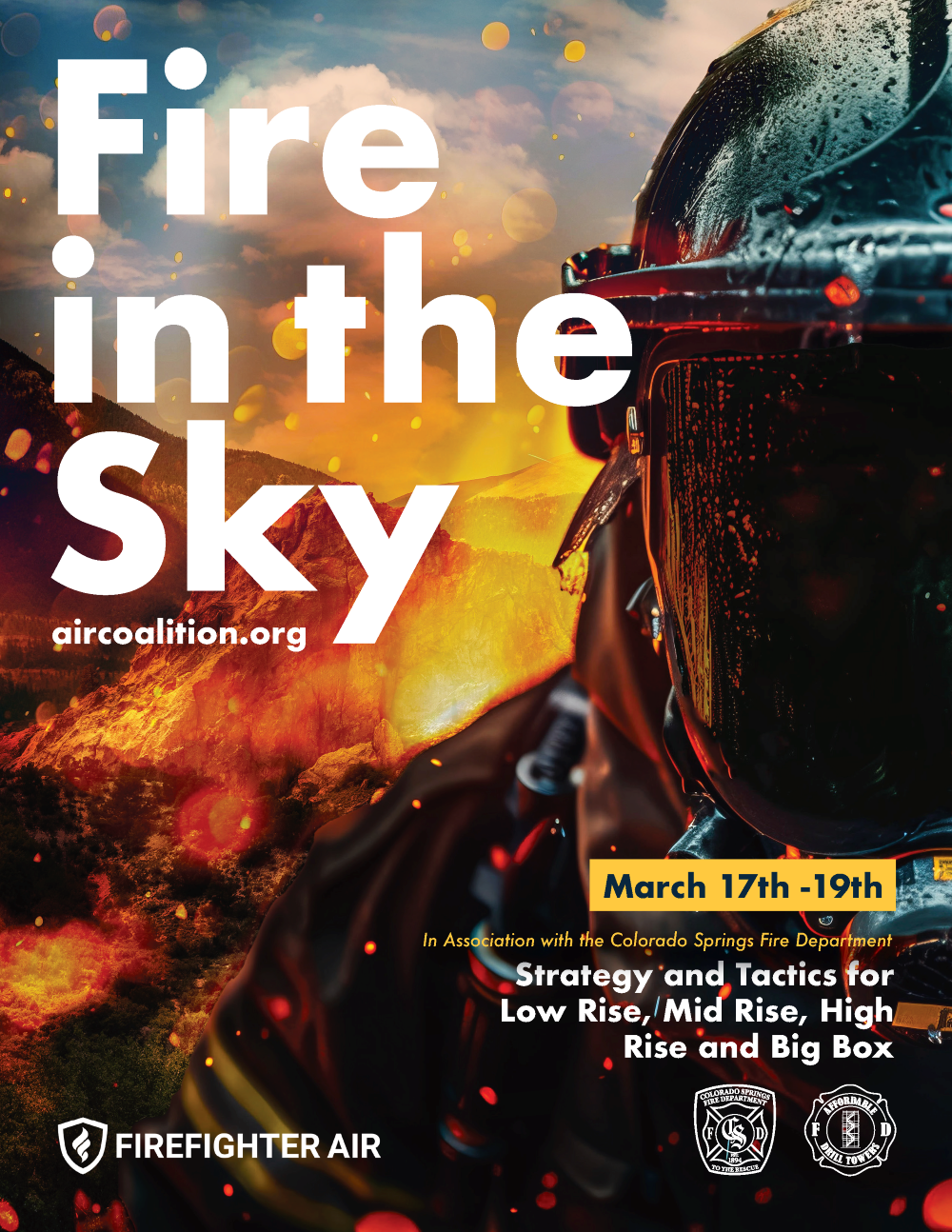
Fire in the Sky, hosted by the Firefighter Air Coalition in association with Colorado Springs Fire Department, brings together eleven instructors from some of the most demanding fire departments in North America — New York City, Chicago, Dallas, Seattle, Denver, Toronto, Las Vegas, Mesa, Meridian, and Everett. The conference runs March 17–19 and covers high-rise, mid-rise, and large-structure firefighting from the ground up. The conference is nearly sold-out.
The venue isn't an accident. Hotel Polaris is the first hotel in Colorado equipped with a fully installed air standpipe system. Attendees won't just hear about the infrastructure — they'll walk the floors, examine connection points, and see what a working air supply system looks like inside a real building.
WHY THIS CONFERENCE EXISTS
There's a math problem built into modern firefighting, and it doesn't favor the people going in.
A standard SCBA bottle gives a firefighter between 15 and 30 minutes of breathable air. That sounds like enough until the building starts working against them. In a high-rise, a significant portion of that air is gone before anyone reaches the fire floor — burned through on the stairwell climb, the hallway walk, the gear-up outside the door. By the time a firefighter is where the work needs to happen, the clock is already running fast.
In large warehouse and distribution facilities — the kind being built across the country to support e-commerce, logistics, and cold storage operations — the problem looks different but cuts just as deep. Some of these buildings exceed a million square feet. The distance from the front entrance to the seat of a fire can stretch past a quarter mile. Hose stretches that would be routine in a commercial structure become operations in their own right. Air consumption climbs before the first line is charged.
Mid-rise residential buildings — the five-to-fifteen story structures filling in urban neighborhoods — sit in a particularly difficult position. They're tall enough to create the same stair climb and air drain problems as a high-rise, but they often fall outside the specific training and infrastructure that high-rise protocols are built around. Departments that drill for high-rise operations and departments that drill for residential structure fires sometimes find that mid-rise falls between both.
And cutting across all of it, increasingly, is lithium-ion. Battery fires in electric vehicles, e-bikes, scooters, and energy storage systems behave in ways that standard firefighting assumptions don't account for. In a high-rise parking structure or a residential building with battery storage in a utility room, the fire behavior, the air demands, and the tactical approach are all different.
The Firefighter Air Coalition was built specifically around the air supply gap — the distance between what firefighters carry into a building and what the building actually demands. Fire in the Sky exists to close that gap, one department at a time, with instruction from people who have worked these fires.
"Air is everything," said Mike Gagliano, President of the Firefighter Air Coalition. "Without it, search and rescue stops. Extinguishment stops. Overhaul stops. Salvage stops. Everything done in the interior attack depends on breathable air reaching firefighters."
THE INSTRUCTORS
What makes Fire in the Sky different from a standard conference isn't the agenda. It's who's in the room. These aren't academics or theorists. Every instructor in this epic line-up has stood in the environments they're teaching about and made decisions under pressure. The curriculum was built around what they actually know.
Captain Mike Gagliano | Seattle Fire Department (Ret.) | 33+ Years
Session: "Fire in the Sky – And Now You're Out of Air"
Mike Gagliano has been making the case for air management longer than most firefighters have been in the service. He co-authored Air Management for the Fire Service, has taught at FDIC for over a decade, and has taken the air management conversation to departments across the country in a way few people have matched.
As president of the Firefighter Air Coalition, Gagliano has spent years looking at the systemic side of the problem — not just how individual firefighters manage their air on a given fire, but what the buildings themselves demand and whether the infrastructure exists to support extended operations. His opening session sets the foundation for everything that follows over the three days.
Captain Mike Dugan | Fire Department of New York City (Ret.) | 45 Years of Fire Service | 27 Years FDNY
Session: "Fire in the Sky – And Now You're Out of Air"
Mike Dugan spent 27 years at FDNY and retired from Ladder 123. He earned the James Gordon Bennett Medal and the Harry M. Archer Medal for bravery — two of the department's most significant recognitions for performance under fire. He developed training programs that were delivered to every member of the department. He's been a contributing editor at Fire Engineering for years. In 2021, he received the Tommy Brennan Lifetime Achievement Award.
That résumé matters, but what matters more is what Dugan brings into the room. FDNY operates in one of the most vertically dense environments on the planet. The department has worked high-rise fires that other departments study. The lessons Dugan carries out of that experience are the kind that don't appear in textbooks because they haven't been written down yet — they're passed from firefighter to firefighter, officer to officer, in the way the fire service has always transmitted its most important knowledge.
Dave McGrail | Denver Fire Department (Ret.)
Session: High-Rise Operations / Standpipe Operations: Over Analysis = Paralysis"
Dave McGrail built his career inside Denver's high-rise environment and spent years working standpipe operations from every angle — the planning side, the tactical side, and the moments when neither matched what the building actually presented.
His session will address one of the more stubborn problems in high-rise training: the gap between what departments think they know and what they actually face when the standpipe system doesn't behave the way the manual said it would. The title of his second session says it plainly. When standpipe operations get overcomplicated in theory, they collapse under pressure in practice. McGrail's approach strips the operation back to what works.
Captain Jimmy Davis | Chicago Fire Department
Session: "Protecting Vertical Cities: The First 5 Minutes"
Chicago's skyline is one of the defining vertical environments in American firefighting. Captain Jimmy Davis works in it. His session is built around the first five minutes of a high-rise response — the window that doesn't get repeated and sets the conditions for everything that follows.
What happens in those first five minutes determines how long the operation runs, how much air gets used before the fire is even located, and whether the building's systems work with the firefighters or against them. Davis breaks down that window with the specificity that only comes from having lived it.
Captain Clark Lamping | Clark County Fire Department
Session: "Big Box Fires = Big Problems"
The Las Vegas metro area isn't just casino resorts and hotel towers. Clark County Fire covers some of the largest warehouse and distribution footprints in the American West, and Captain Clark Lamping has worked fires in structures that most departments will never see in a career. Big-box fires require a different kind of thinking — about hose stretch, about air supply, about the point at which interior operations have to give way to something else. Lamping brings that thinking to Colorado Springs.
Battalion Chief Chris Sleigher | Mesa Fire Department (Ret.)
Session: "Mid-Rise Mindset: Making Elevated Decisions"
Mid-rise buildings are the fire service's blind spot. Too tall to treat like a residential structure. Not tall enough to trigger the high-rise protocols that departments have spent years developing. Battalion Chief Chris Sleigher spent his career in Mesa working the buildings that fall between the categories — and figuring out what it actually takes to operate effectively in them.
His session addresses the tactical and psychological dimensions of mid-rise firefighting: how to make good decisions in buildings that don't fit the training model, and how to keep a crew oriented when the building's size and layout push against everything that felt familiar.
Brent Brooks | Toronto Fire Services
Session: "High-Rise Firefighting 2.0: Lithium-Ion and Modernizing High-Rise Firefighting"
Lithium-ion battery fires are not a future problem. They are a current one, and the fire service's existing high-rise playbook was written before they existed in significant numbers. Brent Brooks of Toronto Fire Services works on the intersection of where high-rise firefighting is and where it needs to go — updating SOGs and SOPs to account for battery fire behavior, revising suppression approaches, and rethinking what air consumption looks like when the fire doesn't behave the way fires used to.
Toronto operates in one of North America's most active high-rise environments. Brooks brings a perspective shaped by that operational tempo and a clear-eyed view of what the next generation of high-rise firefighting has to look like.
Chief Kris Blume | Meridian Fire Department
Session: "Bringing the Firefight to Mid/High-Rise Buildings Under Construction"
A high-rise under construction is a different animal than a finished building. The suppression systems aren't complete. The floors may be open to wind and weather. Workers are present. The building's structure is visible in ways it won't be once the walls go up — which creates both hazards and opportunities that finished-building tactics don't account for.
Chief Kris Blume has worked these environments and developed the operational thinking to match them. His session covers how departments can approach fires in buildings that are still being built — before the infrastructure that makes high-rise firefighting manageable is in place.
Captain Jay Bonnifield | Everett Fire Department
Session: "Anatomy of a Stretch"
A hose stretch that works in a standard commercial building can fall apart completely in a large structure. The distances are different. The air consumption required to complete the stretch is different. The planning required before the first piece of hose leaves the rig is different.
Captain Jay Bonnifield's session breaks down the anatomy of a large-structure stretch from the beginning — what goes into the planning, how execution changes across different building types, and what happens to air when the stretch goes longer than expected. It is one of the most operationally specific sessions on the agenda.
Deputy Chief Daniel DeYear | Dallas Fire-Rescue Department (Ret.)
Session: "Big Box Fires – Thinking Outside the Bigger Box"
His session approaches big-box firefighting from a strategic elevation — what departments consistently get wrong in their pre-incident planning, where the assumptions break down, and how to build a response framework that holds up when the building is larger than anything the crew has trained for.
Daniel DeYear's career covers more ground than most people in the fire service. He spent more than 30 years with Dallas Fire-Rescue, retiring as Deputy Fire Chief. He holds master-level certifications as a firefighter, fire inspector, instructor, fire investigator, Fire Officer IV, hazardous materials technician, incident safety officer, and incident commander. He worked more than 20 years as a licensed paramedic. He served as International Fire Marshal for the U.S. Department of State at American embassies and consulates in more than 35 countries. The Texas Association of Fire Educators named him Instructor of the Year in 2020.
Lieutenant Mike Ciampo | Fire Department of New York City (Ret.)
Session: "Truck Company Operations at Large Structure Fires"
Truck company work in a large structure is a coordination problem as much as a physical one. The distances involved, the number of access points, the difficulty of maintaining orientation — all of it bears down on how truck companies can operate effectively. Lieutenant Mike Ciampo is an FDNY veteran, a longtime author, and a contributing editor whose work on large-structure tactics has shaped how departments think about truck company deployment in buildings with big footprints.
THE VENUE
Hotel Polaris was chosen for a reason beyond logistics. It is the first hotel in Colorado with a fully installed air standpipe system — the kind of infrastructure the Firefighter Air Coalition has advocated for in high-rise and large-structure buildings across the country.
Conference sessions will include guided walkthroughs of the system. Attendees will see standpipe connection points, examine air supply equipment, and walk through the infrastructure in a functioning building environment. For many attendees, it will be the first time they have seen a working air standpipe system up close. That experience alone is worth the trip.
*** Registration is Closing ***
With a nearly sold-out audience, Fire in the Sky is open to firefighters, company officers, battalion chiefs, fire chiefs, and municipal leaders. It is also relevant to building officials and city planners working on high-rise development, large-structure permitting, and infrastructure standards — the people who make decisions about what gets built and what systems go inside it.
The conversation about air supply in tall and large buildings is not exclusively a firefighting conversation. It is a building design conversation, a code conversation, and a public safety conversation. Fire in the Sky brings those threads together.
Register Now.
EVENT DETAILS
Event: Fire in the Sky 2026
Dates: March 17–19, 2026
Location: Hotel Polaris | Colorado Springs, Colorado Registration: aircoalition.org | 719-886-1100
Shawn Longerich
Firefighter Air Coalition
+1 317-690-2542
email us here
Visit us on social media:
LinkedIn
Instagram
Facebook
YouTube
Without Air
Legal Disclaimer:
EIN Presswire provides this news content "as is" without warranty of any kind. We do not accept any responsibility or liability for the accuracy, content, images, videos, licenses, completeness, legality, or reliability of the information contained in this article. If you have any complaints or copyright issues related to this article, kindly contact the author above.
